
Forward-thinking organisations increasingly face rising stress-related absence, burnout and growing expectations around workforce health oversight.
Our AI-powered Workforce Health Intelligence Programme provides structured physiological risk visibility before symptomatic illness develops. It reflects the evolving model of preventative healthcare — where early data-informed assessment supports timely intervention rather than reactive treatment.
For employers, this approach offers measurable insight into emerging physiological strain across the workforce — supporting informed decision-making without intrusive data collection.
It aligns naturally with an organisation’s Duty of Care responsibilities, providing a structured and documented framework for proactive workforce health engagement.
Employees place their hands on the device for approximately 3–5 minutes. No blood, no needles, no discomfort.
The system analyses bio-energetic and physiological markers using advanced AI modelling to identify potential imbalances.
Each participant receives an individual confidential report with guidance for proactive health engagement. Results are not shared with employers.
Professional firms increasingly operate in environments where sustained cognitive load, deadline pressure and performance expectations create cumulative physiological strain across teams. These pressures often remain invisible until absence, reduced productivity or long-term health disruption emerges.
In recent screening cycles within medium-sized professional teams, measurable physiological stress activation has been identified in approximately 60–70% of participants, with 25–35% falling into categories where structured medical follow-up was advisable — typically before formal sickness absence occurs.
Workforce health screening provides early structured visibility of emerging imbalance before escalation. Rather than reacting to problems once they surface, organisations gain proportionate oversight and the ability to demonstrate responsible engagement with workforce health.
For many employers, this approach offers a practical balance — supporting duty of care responsibilities while preserving individual confidentiality.
Illustrative example of voluntary screening outcomes (confidential & anonymised)
A mid-sized professional services company with approximately 45 office-based employees requested on-site AI Workplace Health Scans as part of their annual wellbeing initiative.
The organisation had no current sickness crisis, but senior leadership had identified increasing stress levels and reduced resilience within key teams.
Although formal absence levels remained stable, managers reported:
• Reduced concentration
• Increased irritability within teams
• Early signs of burnout in high-responsibility roles
• Higher than usual presenteeism
The company wished to act preventatively rather than reactively.
Individual confidential reports identified recurring patterns among participants:
• Elevated stress-response indicators
• Autonomic nervous system imbalance
• Stress-load indicators
• Sleep-cycle disruption markers
Importantly, several employees who subjectively reported feeling “fine” showed measurable stress dysregulation.
Following the screening:
• Employees engaged more proactively with GP and lifestyle support
• HR implemented structured workload reviews
• Leadership introduced targeted wellbeing workshops
• Internal wellbeing engagement increased significantly
No individual reports were shared with management. Only anonymised trend data was discussed at organisational level.

We believe in clarity and accountability. Below you can view sample formats of both the individual confidential report employees receive and the anonymised annual organisational summary available to employers.
See the structure and level of detail employees receive; based on the package chosen.
See the structure and level of detail employers receive; based on the package chosen.
Clear tier structure, defined clinical scope and transparent pricing for organisations.
Modern workplace health strategies often rely on reactive models — blood tests, GP appointments, or occupational referrals once symptoms have already developed.
However, symptoms are typically the final stage of dysregulation.
Whole-body systems screening provides an early overview of physiological stress patterns before measurable pathology emerges.
The AI Workplace Health Scan evaluates regulatory balance across:
• Nervous system function
• Stress-response pathways
• Immune resilience markers
• Digestive and metabolic indicators
• Cardiovascular regulation
• Sleep and recovery patterns
Rather than focusing on one isolated biomarker, this approach identifies system imbalance trends that may later contribute to absence, burnout, or chronic health deterioration.
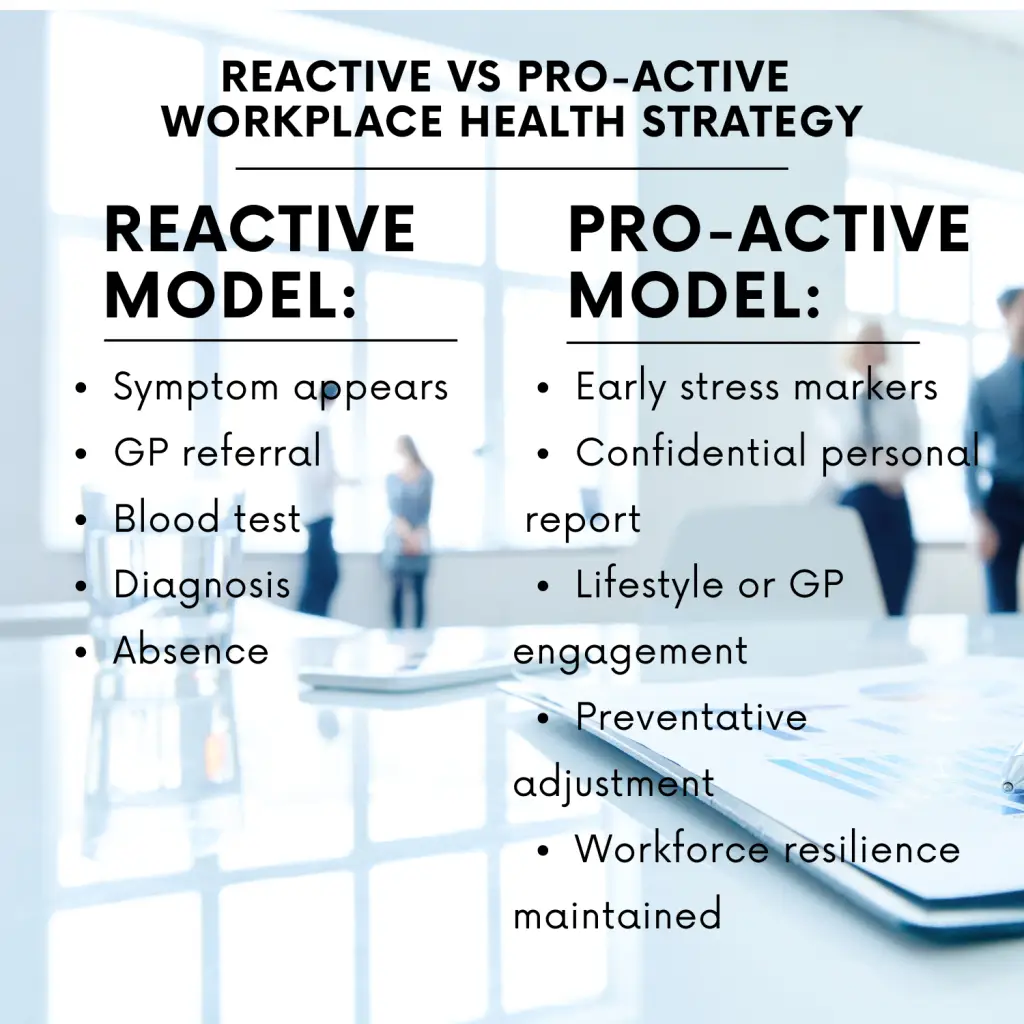
Proactive screening shifts workplace health from reaction to early risk awareness.
By identifying early stress and system-level imbalances before symptoms escalate, organisations can support engagement, reduce preventable absence, and strengthen workforce resilience — while maintaining full confidentiality for employees.
In this context, structured and transparent reporting becomes essential — both for individual clarity and organisational oversight.
While individual health concerns are personal, the operational consequences of cumulative workforce strain are organisational.
Across UK professional sectors, stress-related absence remains one of the leading contributors to lost working days. Even short-term absence events frequently originate from prolonged physiological overload that has gone unrecognised. The cost is not only financial, but relational — disruption to teams, increased workload redistribution and reduced cognitive performance.
Proactive screening does not attempt to medicalise the workplace. It provides early visibility.
For many organisations, that visibility becomes the difference between reactive absence management and measured, preventative engagement.
Forward-thinking organisations increasingly recognise that wellbeing is not only a moral responsibility but a strategic and regulatory consideration. Proactive engagement supports workforce resilience, retention, and compliance culture by:
 Demonstrating visible commitment to employee wellbeing Supporting early health awareness and engagement Encouraging personal responsibility for health Complementing existing occupational health frameworks Aligning with UK duty of care and wellbeing best practice Can contribute to ESG and corporate wellbeing reporting
UK employers have a legal and ethical responsibility to protect the health, safety, and wellbeing of their workforce. Modern workplace health strategies increasingly extend beyond reactive absence management toward proactive risk awareness and engagement.
AI-powered workplace health screening can support organisations by:
✓ Demonstrating visible commitment to employee wellbeing
✓ Encouraging early engagement before issues escalate
✓ Complementing existing Occupational Health provision
✓ Supporting compliance culture under the Health and Safety at Work Act 1974
✓ Contributing to ESG and workforce wellbeing reporting frameworks
Participation remains voluntary and confidential. Individual reports are not shared with employers.
This screening does not replace GP or hospital investigation, nor does it constitute medical diagnosis. It is designed to support awareness and informed engagement.