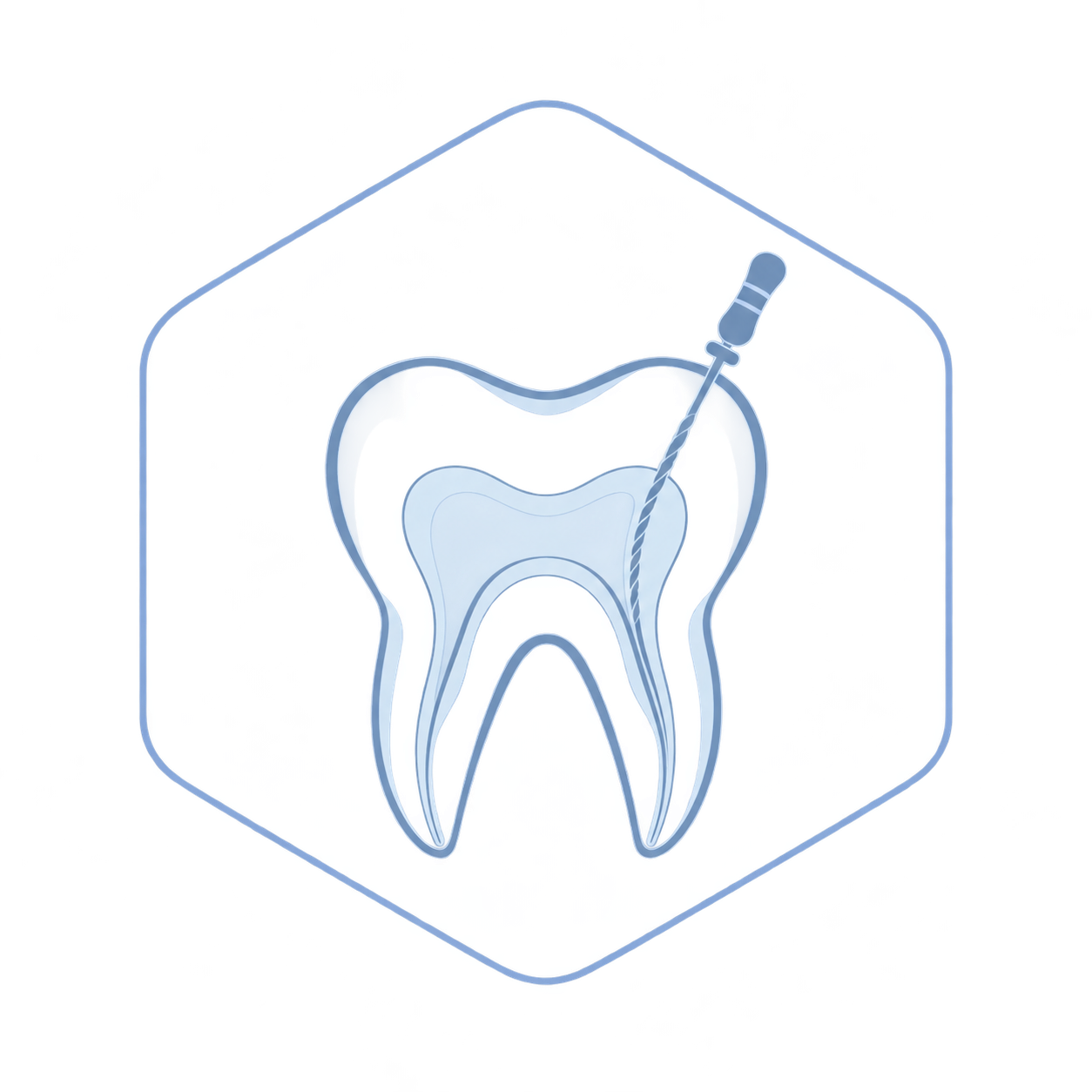
Root Canal Treatment: Helping You Keep Your Natural Tooth
Our aim is to preserve your natural tooth whenever it is suitable to do so.
When the soft tissue inside a tooth becomes inflamed or infected, root canal treatment can offer a way to treat the problem without removing the tooth.
Deep decay, a crack or an injury can damage the pulp—the tissue containing nerves and blood vessels inside your tooth. You may experience toothache, prolonged sensitivity or pain when biting, although some affected teeth cause little discomfort.
How does Root Canal Treatment Work?
1
Assessment and treatment planning
Your dentist examines the tooth and takes a digital dental X-ray to assess its roots and surrounding bone. An OPG may be arranged if a wider view is needed, helping us plan your treatment.
2
Making your tooth comfortable
Local anaesthetic is used to numb the tooth and surrounding area before treatment begins. Your dentist checks that you are comfortable and allows time for the anaesthetic to work, adjusting it if needed.
3
Removing the affected tissue
Your dentist makes a small opening in the tooth to reach the pulp chamber. The inflamed or infected tissue is carefully removed from the chamber and root canals, preparing the tooth for thorough cleaning.
4
Cleaning and preparing the canals
Fine dental instruments and disinfecting solutions are used to clean and shape the root canals. This may take several appointments, with a temporary filling protecting the tooth between visits while treatment is completed.
5
Filling & sealing the canals
Once the canals have been prepared, they are filled with a dedicated root-filling material and sealed. This closes the spaces inside the roots and helps prevent bacteria from entering and causing infection again.
6
Restoring and protecting your tooth
The tooth is restored with a permanent filling or crown, depending on how much healthy tooth remains. Your dentist explains the most suitable option to protect the tooth and help you bite and chew comfortably.
WHEN MIGHT YOU NEED ROOT CANAL TREATMENT?
Toothache or Sensitivity? Know When to Seek Help
Persistent toothache
Ongoing or throbbing tooth pain, especially when it interrupts sleep or starts without an obvious trigger, may indicate inflammation or infection inside the tooth. Arrange a dental assessment to identify the cause.
Lingering hot or cold sensitivity
Pain that continues after a hot drink or cold food has gone may suggest damage to the pulp inside your tooth. A dental examination can establish whether root canal treatment is needed.
Pain when biting or chewing
Pain when you bite down, chew or touch a tooth can be linked to a crack or inflammation around its roots. Your dentist will assess the tooth and recommend the appropriate treatment.
These symptoms can have several causes and do not automatically mean you need root canal treatment. Early assessment helps us identify the problem and discuss your options.
Your Root Canal Questions Answered
It’s natural to have questions before treatment. Here are answers to some common concerns, so you can feel more prepared for your appointment.
Root canal treatment is usually carried out under local anaesthetic to numb the tooth and surrounding area. You may feel some tenderness afterwards, which should gradually settle as the area recovers.
Root canal treatment usually takes two or more appointments, depending on the tooth and the complexity of treatment. Your dentist will explain the expected schedule after assessing your tooth. A temporary filling may be placed between visits.
Some teeth need a crown after root canal treatment; others can be restored with a permanent filling. Your dentist will assess your tooth and explain which restoration is suitable before completing your treatment.
The area around your tooth may feel sore or tender initially. Follow your dentist’s aftercare advice and attend any follow-up appointments. If discomfort worsens or swelling develops, contact the clinic for advice.