

Platelet-Rich Plasma (PRP)
Therapy in Watford

Persistent joint or tendon pain can affect everyday movement, exercise and recovery. Platelet-Rich Plasma (PRP) therapy uses platelet-rich plasma obtained from a small sample of your own blood and may be considered for treatment of selected joint and soft-tissue conditions.

PRP therapy in Watford is provided at Phoenix Medical Clinic, following an individual orthopaedic assessment to establish whether PRP may be suitable for your condition and to discuss the potential benefits, limitations, risks and alternative treatment options.

What is Platele Rich Plasma (PRP) Therapy

PRP therapy is a non-surgical treatment that uses platelet-rich plasma obtained from a small sample of your own blood.

The blood is taken from a vein and processed in a centrifuge to separate the platelet-rich plasma from the other blood components.

The plasma is then injected into the affected joint or soft tissue to support the body’s natural healing response.

Your PRP Treatment
Journey

Orthopaedic Assessment

Meet with our doctor to discuss your symptoms, medical history and previous treatments. Your condition will be assessed to establish whether PRP therapy may be appropriate for you.

Blood Collection and Plasma Separation

A small blood sample is taken from a vein and processed in a centrifuge to separate the platelet-rich plasma from the other blood components.

PRP Injection and Aftercare

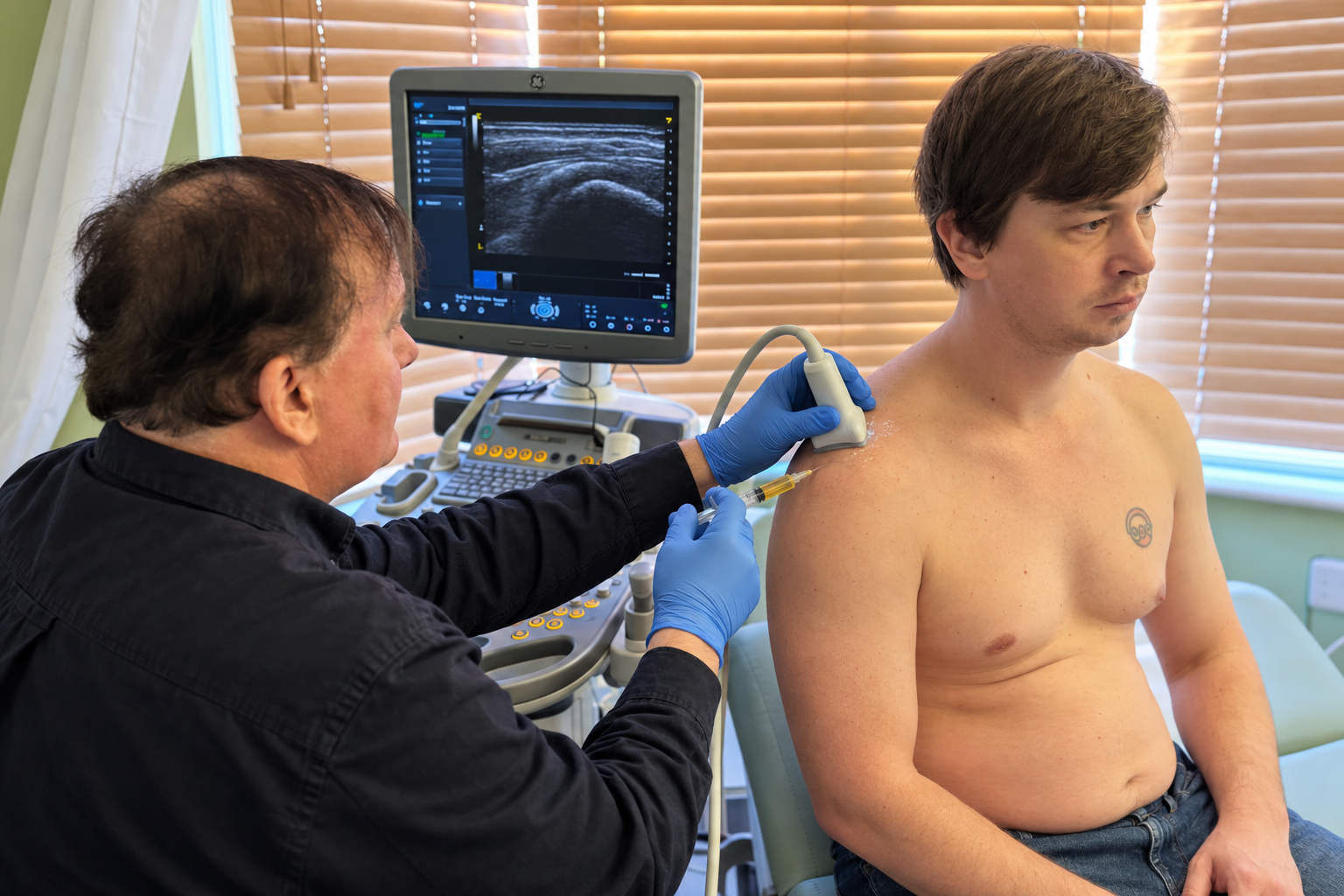
The platelet-rich plasma is injected into the affected joint or soft tissue, using ultrasound guidance where appropriate. You will receive individual aftercare and activity guidance following your treatment.

See How PRP Therapy Works - Re-booting Your Healing Computer

What is the role of platelet rich plasma (PRP) and other biologics in the natural healing process?
This short educational video explains how platelet-rich plasma, obtained from the patient’s own blood works and supports the body’s natural healing response.
Hear from HSS primary care sports medicine physician Dr. Brian Halpern.

Your PRP
Questions Answered

Considering PRP treatment? 

Here are clear answers to some of the questions patients commonly ask before arranging an orthopaedic assessment.

In short, PRP is a non-surgical treatment that uses platelet-rich plasma obtained from a small sample of your own blood.

The blood is processed in a centrifuge to separate the plasma containing a higher concentration of platelets from the other blood components. Platelets release natural proteins and growth factors involved in the body’s healing response.

The prepared plasma is then injected into the affected joint or soft tissue. PRP is not a stem-cell treatment, and no blood or tissue is taken from another person.

Following an individual orthopaedic assessment, PRP may be considered for selected conditions including:

  • Knee and other joint osteoarthritis
  • Shoulder, foot, ankle and and some spine problems
  • Rotator cuff tendinopathy and selected partial tendon tears
  • Other persistent shoulder tendon conditions
  • Tennis elbow and golfer’s elbow
  • Patellar tendinopathy, sometimes called jumper’s knee
  • Achilles tendinopathy
  • Plantar fasciitis
  • Selected ligament, muscle and sports injuries

PRP is not suitable for every type of pain or injury. An accurate diagnosis is important because similar symptoms can have very different causes.

A small sample of blood is taken from a vein in your arm. It is placed in a centrifuge, which separates the platelet-rich plasma from the other blood components.

The treatment area is prepared carefully, and the plasma is injected into the affected joint, tendon or soft tissue. Ultrasound guidance may be used where clinically appropriate to help place the injection accurately.

Because the plasma comes from your own blood, this is known as an autologous treatment.

The number of treatments depends on the condition being treated, how long you have experienced symptoms, the health of the affected tissue and your response to treatment.

Some patients may be advised to have a single injection, while others may be offered a course of treatment. Based on investigation and findings, usually detailed MRI report, the doctor will explain the proposed treatment plan following your assessment.

Temporary soreness, stiffness, swelling or a short-lived increase in discomfort can occur following PRP treatment. This may be part of the local response to the injection and does not necessarily mean that something has gone wrong.

You will receive personalised advice about activity, pain relief and rehabilitation. Strenuous exercise or heavy use of the treated area may need to be avoided for a period recommended by the doctor.

Physiotherapy or a structured rehabilitation programme may also be advised as part of your treatment.

PRP does not usually provide immediate pain relief. If treatment is effective, improvement is generally gradual and may develop over several weeks. Some patients continue to notice changes over the following months.

The outcome can be influenced by the condition being treated, the health of the affected tissue, the patient’s general health and lifestyle, and how closely the recommended aftercare and rehabilitation plan is followed.

Depending on the area treated and the physical demands of your work, the doctor may recommend taking some time away from work, arranging lighter duties or temporarily avoiding strenuous exercise and repetitive movement. This helps to protect the treated area from excessive loading while the early healing response develops.

Following injections into the leg, knee, ankle or foot, some patients may be advised to use crutches for a short period. Crutches should only be used for the length of time and in the manner recommended by the doctor.

Activity should then be increased gradually, often alongside physiotherapy or an individually planned rehabilitation programme. Following these recommendations is an important part of treatment, although no particular result or duration of benefit can be guaranteed.

PRP is generally considered a low-risk procedure because the plasma is obtained from your own blood. No donor blood or tissue is used, which means that the risk of rejection, cross-contamination from a donor or an allergic reaction to the PRP itself is very low.

At Phoenix Medical Clinic, blood collection, PRP preparation and injection are carried out using sterile, single-use medical equipment obtained from established UK medical suppliers. These measures help to minimise the risk of contamination and infection.

The most common effects are temporary pain, soreness, swelling, stiffness or bruising around the treatment area.

Less common risks include bleeding, a prolonged flare of pain or feeling faint during the blood collection. As with any injection, there remains a small risk of infection or injury to a nearby nerve or blood vessel. Any local anaesthetic or additional medication used during the procedure may also have its own potential side effects, which the doctor will explain where relevant.

Beyond these recognised complications, no other major side effects specific to PRP are commonly expected. However, no medical procedure is completely risk-free, and there is also a possibility that symptoms may not improve or could become worse.

The doctor will discuss the risks relevant to your health and the area being treated before asking for your consent.

PRP may not be appropriate for everyone. Tell the doctor if you:

  • Have an active infection, fever or feel unwell
  • Have a blood, platelet or clotting disorder
  • Have significant anaemia
  • Take blood-thinning medication
  • Take anti-inflammatory medicines or supplements that may affect bleeding
  • Have recently experienced an important change in your health

Do not stop any prescribed medication unless the clinician responsible for that medication advises you to do so.

Suitability can only be established following an individual medical and orthopaedic assessment.

The alternatives depend on your diagnosis and may include:

  • Activity modification and a structured rehabilitation programme
  • Physiotherapy
  • Appropriate pain-relieving or anti-inflammatory medication
  • Shockwave therapy for selected tendon conditions
  • Steroid injections
  • Hyaluronic acid or other joint injections
  • Arthrosamid® for selected patients with knee osteoarthritis
  • Surgery, where clinically necessary
  • Continuing with conservative treatment without an injection

The doctor will explain the reasonable options for your condition, including their potential benefits, limitations and risks. Choosing not to proceed with PRP is also an option.

PRP is recognised and permitted for medical use in the UK. Because it is individually prepared from a sample of the patient’s own blood, it is regulated differently from a mass-produced medicine.

The medical use of PRP falls within the UK regulatory framework overseen by the Medicines and Healthcare products Regulatory Agency (MHRA). The equipment used to collect, prepare and administer PRP must also meet the applicable UK requirements for medical devices.

At Phoenix Medical Clinic, PRP treatment is provided by a registered doctor following an individual orthopaedic assessment. We use sterile, single-use medical equipment supplied by established UK medical wholesalers and follow appropriate infection-control, consent and clinical-governance procedures.

As PRP is obtained from the patient’s own blood, the risk of rejection or an allergic reaction to the plasma itself is very low. However, as with every injection, some risks remain and these will be explained by the doctor before treatment.

Ready to speak
with a doctor?

PRP Watford I Phoenix Medical Clinic